

We sat down with our in-house coach and product tester, Evan Mercer (TreadWalk Hub Platform), to nail down what “high end treadmills” means in fall 2025 and how to pick the best high end treadmill for real-world training. We also asked Evan to comment on five models readers keep seeing on Amazon. You can always scan recent Amazon reviews to gauge long-term reliability and day-to-day quirks.
Q: When you say “high end treadmill” what does that actually mean in 2025?
Evan: It’s less about a shiny screen and more about fundamentals that hold up under mileage:
- Drive system with stable torque at running speed. In this tier you see heavier frames, larger rollers, better belt tracking, and motors that don’t surge when you jump from recovery to pace.
- Wide, long decks (typically around 20–22″ x 60″) so you aren’t changing your stride when you’re tired.
- Impact management that’s consistent across the deck, not just “soft.” Good systems balance cushioning and rebound so you can do tempo runs without feeling boggy.
- Training automation. Auto-adjust speed and grade when a coach cues it; adaptive logic that learns your preferences; and heart-rate-based control that keeps you in a zone without fiddling with knobs.
- Reliable grade range. Decline matters for quad conditioning; steeper incline expands hiking and hill-repeat options.
- Software that doesn’t get in your way: fast boot, clean UI, and content you’ll actually use.
- Safety design: low step-up, stout side rails, and sane emergency-stop behavior.
Price varies, but you’re generally paying for frame, drive, deck, and the bits that keep those three aligned over years – not just the TV on the front.

Q: What tech trends define high-end machines right now?
Evan: “If you ask me which of these trends will still matter a year from now, I’d bet on all three sticking around, but for different reasons.
- Adaptive training and automation isn’t going anywhere. People are tired of fiddling with buttons every thirty seconds. As AI gets woven into more platforms, you’ll see smarter auto-tuning that adjusts not just to heart rate but to recovery patterns and past workouts. It saves mental bandwidth, which is gold when you’re grinding through base miles.
- Expanded grade profiles will keep growing because runners and hikers are training for events that aren’t flat. Trail ultras, mountain marathons, even ski mountaineering prep—these all demand incline and decline work. Brands know that, and it’s cheaper for them to add motorized decline than to lose serious athletes to another brand.
- Commercial-grade chassis at home will remain in demand because the pandemic permanently reset expectations: people want gym-level build under their own roof. The market for flimsy compact treadmills is saturated, but premium buyers are looking for something that feels like the club machine they used for years. That’s why Life Fitness, Precor, and Matrix keep pushing home versions of their commercial decks.
So a year from now, the “best high end treadmills” won’t look radically different—it’ll just have a bit more intelligence in the software, a steeper slope under your feet, and a frame built to last more than one training cycle.”

Best High End Treadmill 2025 – Model spotlights (what our readers keep seeing on Amazon)
Below, Evan calls out who each machine fits, the standout tech, and the trade-offs. Specs are illustrative; check the brand pages and Amazon listings for current details and owner feedback.
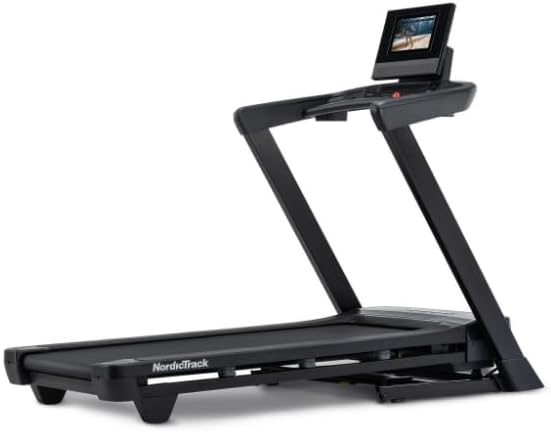
NordicTrack X24
Who it suits: runners who want aggressive hill profiles, trail and hike simulation, or quad-prep with downhill.
Why it stands out: extreme grade range — up to 40% incline with decline to –6% — plus full iFIT integration and auto-matched speed/grade in coached workouts. Downsides: big footprint and not a folder.
“I’ve trained a couple of clients on the X24 who were prepping for mountain ultras. If you crank the incline past 30% and keep it steady for 40 minutes, it’s the closest thing to hiking up a ski slope without leaving your living room.”
NordicTrack Commercial 2450
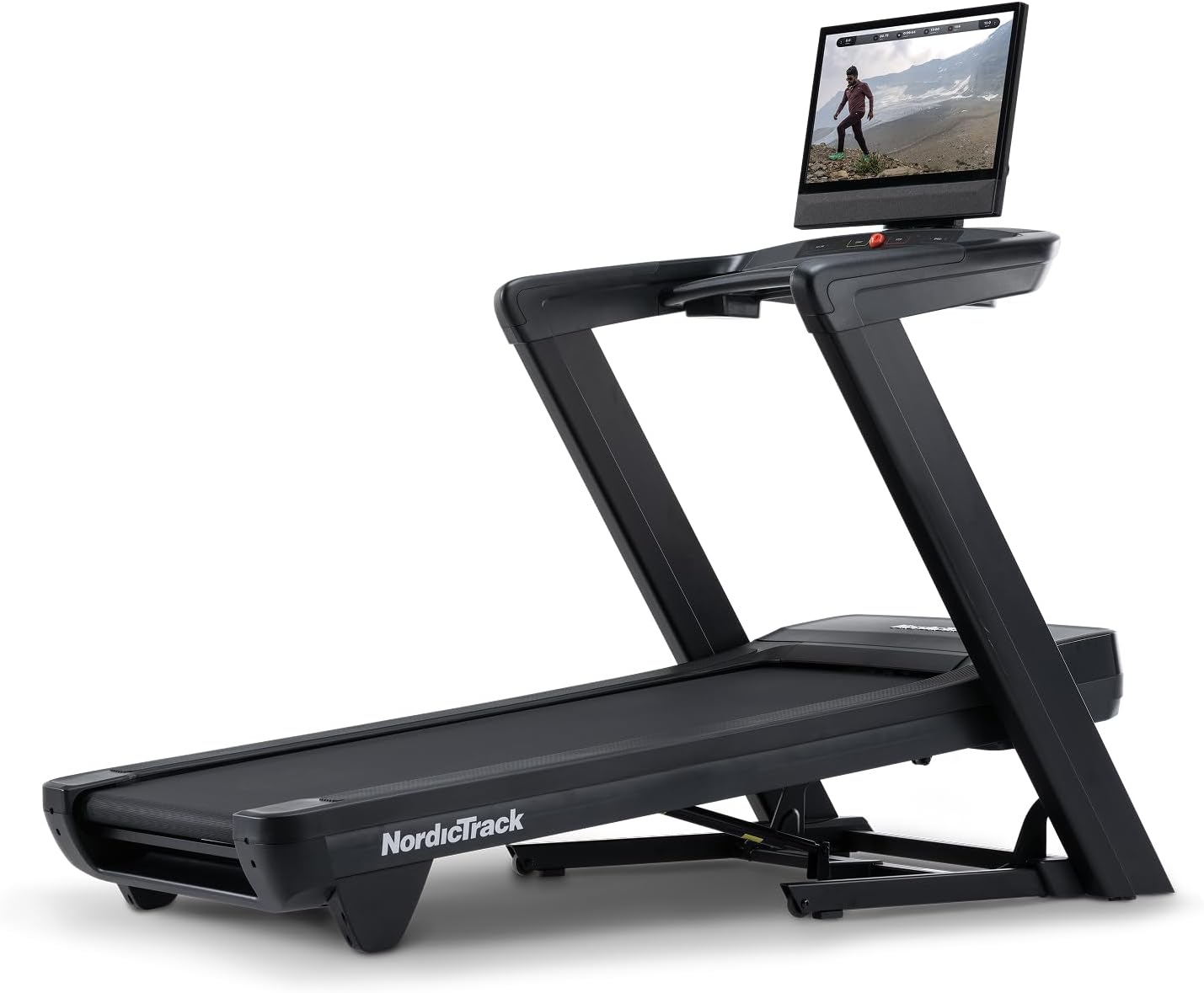
Who it suits: serious runners who still want a folding deck and structured classes.
Why it stands out: grade from –3% to +12%, auto-matching to iFIT workouts, and SmartAdjust that learns your preferred intensity over time. It’s a strong all-rounder without the extreme incline of the X series.
“My brother has the 2450, and what he loves is the balance: he can fold it after a workout, but it still feels steady when he runs intervals at 10 mph. Not many folding treadmills can manage that without shaking.”
NordicTrack Commercial 1750
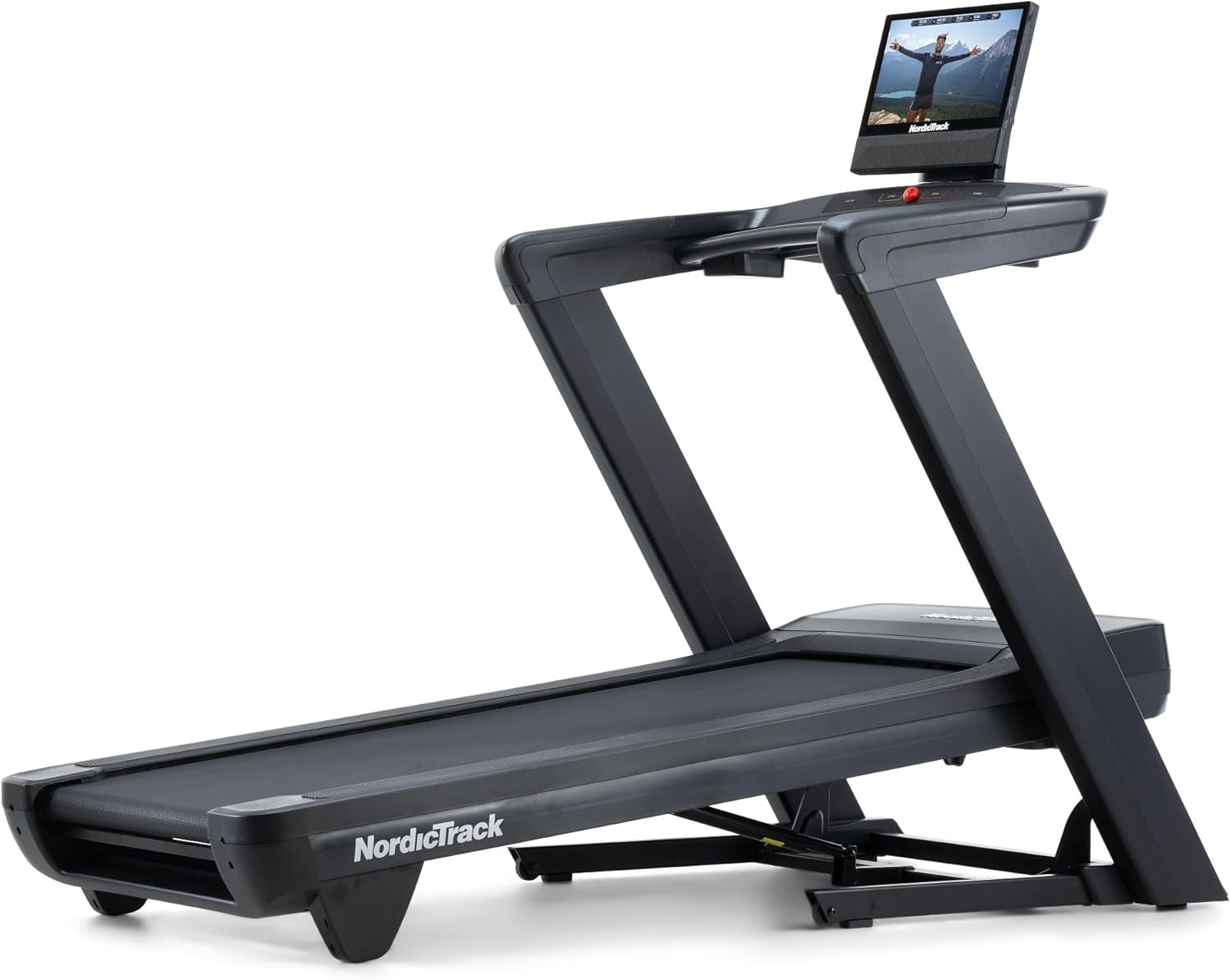
Who it suits: mixed users sharing one machine—walkers, new runners, and marathon plans under one roof.
Why it stands out: the same decline/inside-of-home hill training, with SmartAdjust and ActivePulse heart-rate-guided control. It’s foldable and usually better value than the 2450 if you don’t need the larger console.
“The 1750 is the one I recommend to friends who don’t want to overthink. If you plug in a heart-rate strap, ActivePulse does a solid job of nudging the speed and grade so you’re always in the right training zone.”
We’ve dedicated a separate in-depth review to NordicTrack models, where we break down their full lineup and long-term performance: NordicTrack Treadmill Review 2025: Price, Models, and Key Features
Peloton Tread
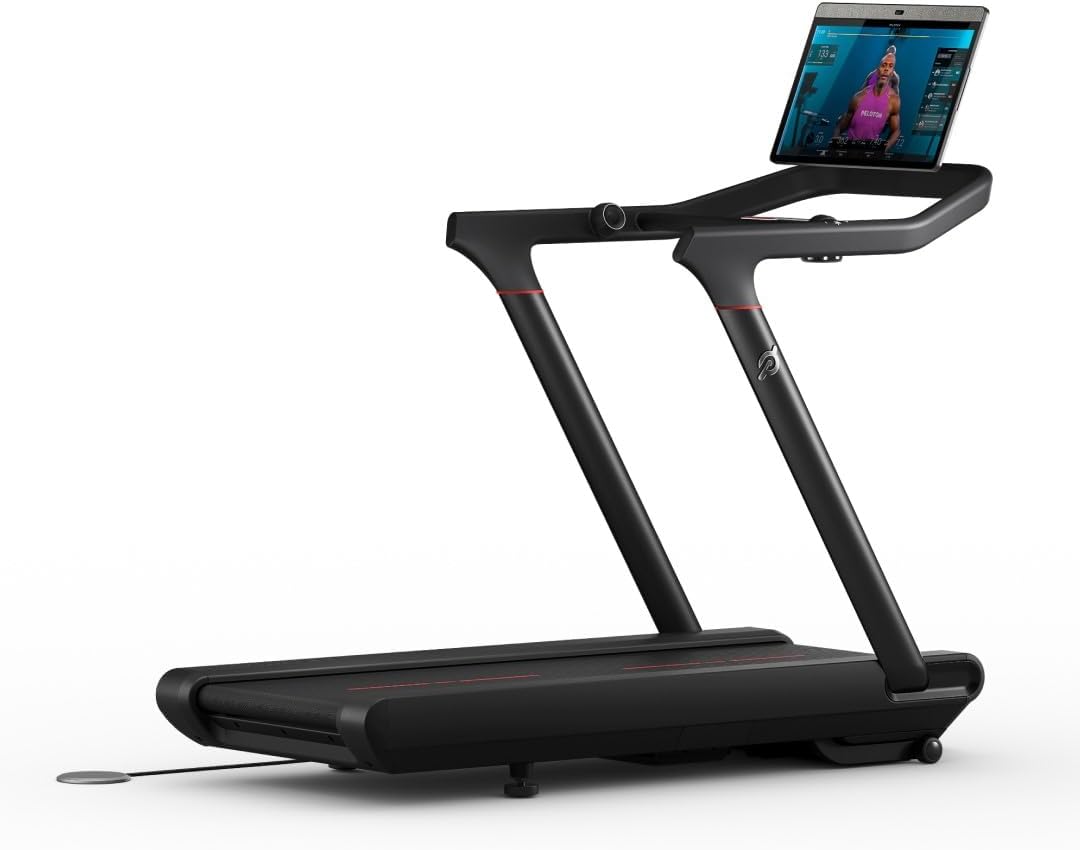
Who it suits: athletes who stay consistent through live classes, leaderboards, and coaching.
Why it stands out: 23.8″ touch display for classes, up to 12.5% incline, 12.5 mph top speed, and a 59″×20″ deck. Polished content and quick interface; membership is part of the equation.
“I had a client who hated treadmills until she got the Peloton Tread. The leaderboard hooked her—suddenly she cared about shaving seconds off her 5K because she wanted to beat the runner two spots ahead. That kind of motivation is hard to fake.”
Life Fitness Club Series+ (home version of a club classic)
Who it suits: runners who want the “health-club feel” at home and don’t care about fancy streaming.
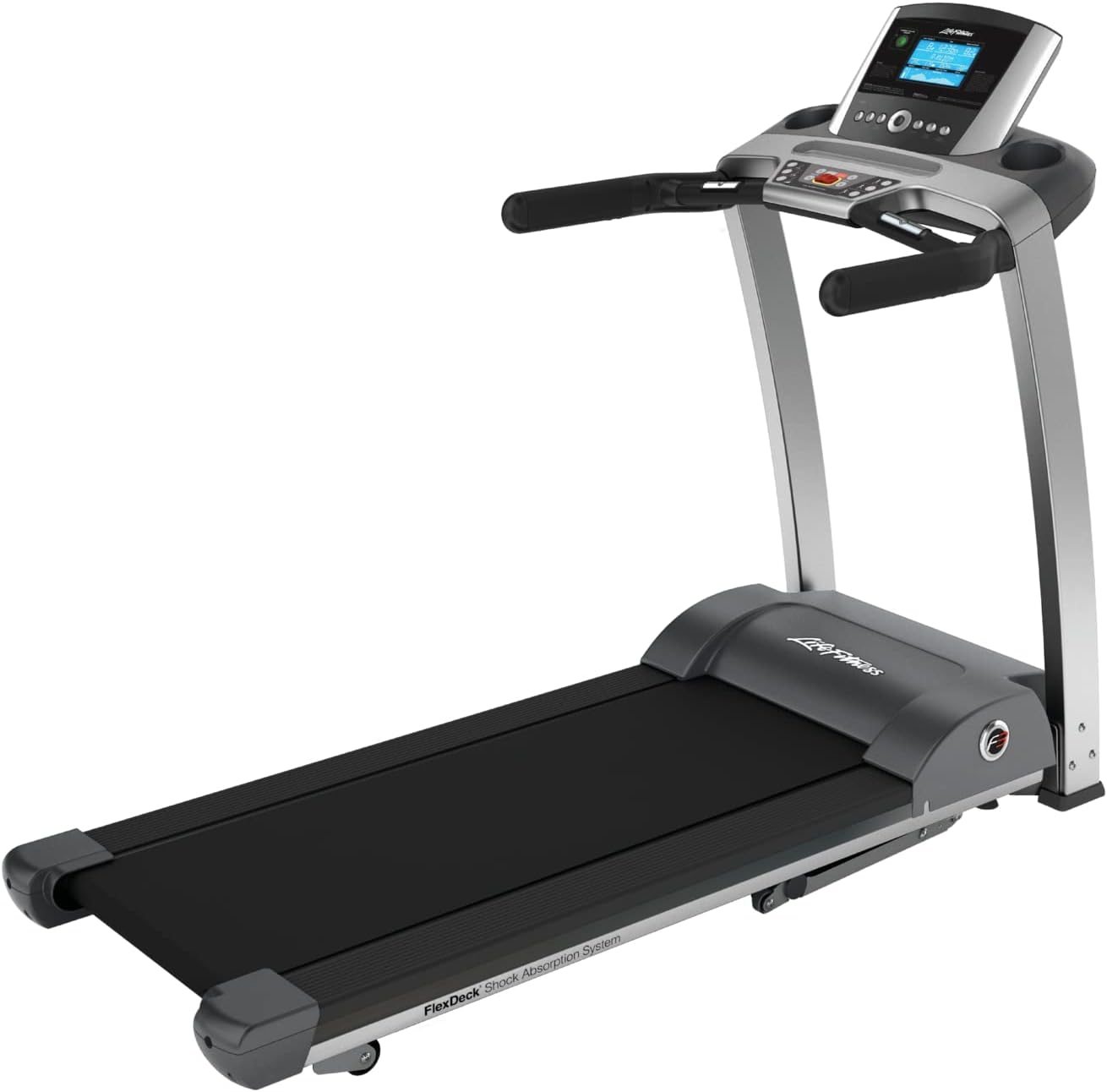
Why it stands out: AC motor build, 22″×60″ deck, 0–15% incline, heavy frame, and FlexDeck shock system that’s designed to reduce joint stress versus a rigid deck. Interface is straightforward and durable.
“At home I run on a Life Fitness Club Series+, which is basically a health-club treadmill shrunk down for residential use. You won’t see that one on Amazon- it’s usually sold through specialty dealers – but you will find the closest relatives: the T3, F3, and T5.
The T5 is the most comparable: wider deck, heavier frame, and a Track Connect console that gets close to the gym feel. The T3 is a simpler fixed-frame version, while the F3 adds folding for people short on space. Mechanically they carry the Life Fitness DNA—solid decks, reliable motors, and long-term parts support.
Now, you might notice the Amazon ratings on these models aren’t stellar. In my experience that often reflects delivery and setup frustrations more than the treadmill itself. These machines are heavy, they arrive in large boxes, and if the delivery isn’t handled well, the review ends up being about the process rather than the run. Among owners who’ve had proper assembly and support, feedback on performance and longevity is much stronger.
So if you’re shopping on Amazon, don’t be scared off immediately by a low star count on the T3 or F3. Read the recent verified reviews carefully, look for notes about the running surface and frame feel, and weigh those against any complaints that are really about shipping or assembly. If you want the closest thing to a true club machine that Amazon carries, the T5 with Track Connect Console is the one I’d recommend checking first.”
Quick comparison
| Model | Grade range | Deck size (approx.) | Screen/content focus | Notable tech |
|---|---|---|---|---|
| NordicTrack X24 | –6% to +40% | Long, full-size running belt | iFIT classes and scenic routes | Extreme incline training, auto-match cues |
| NordicTrack Commercial 2450 | –3% to +12% | Full-size | iFIT with auto-adjust | SmartAdjust adaptive control |
| NordicTrack Commercial 1750 | –3% to +12% | Full-size, folding | iFIT with auto-adjust | SmartAdjust + ActivePulse HR control |
| Peloton Tread | 0% to 12.5% | 59″×20″ | Live/on-demand classes | Fast UI and class ecosystem |
| Life Fitness Club Series+ | 0% to 15% | 60″×22″ | Simple, robust consoles | AC motor, FlexDeck shock system |

How to choose the right machine for your use case
- You need downhill strength for races with elevation? Shortlist models with real decline, not just incline.
- You train better with coaching and music? Prioritize platforms with classes you’ll use every week; a big screen only matters if it keeps you consistent.
- You’re a heavier runner or doing high weekly mileage? Look at max user rating, frame weight, roller size, and whether the brand uses an AC or higher-spec DC motor.
- You’re sharing the treadmill? Adaptive features that remember intensity preferences save time and arguments over speed and grade.
- You value the “club feel”? A heavier chassis with a 22″×60″ deck and proven shock system (like FlexDeck) will feel stable at pace.

High-end treadmill buyer’s checklist
- User height and stride length — taller runners (over 6 ft) need at least a 60″ deck to avoid shortening their stride.
- User weight — check the maximum weight rating; for heavier athletes, look for 300 lbs+ with a frame weight that’s at least 250 lbs for stability.
- Motor type and power — 3.0 CHP or more for consistent running, AC motors if you want commercial-level durability.
- Roller size — larger rollers (2.5″–3″) reduce belt wear and run quieter.
- Incline and decline — at least 12% incline for hill work; decline down to –3% or more if you train for races with elevation loss.
- Deck and cushioning — full-size (20–22″ wide, 55–60″ long) with shock absorption that balances comfort and firmness.
- Folding vs. fixed frame — folding is practical in small spaces, but fixed frames are usually sturdier.
- Console and software — decide if you want a big screen with classes, or a simpler display with fewer distractions.
- Noise level — important if you live in an apartment; look for brushless motors and quiet decks.
- Connectivity — Bluetooth heart rate, chest strap support, training apps, and any subscription requirements.
- Warranty and service — premium treadmills should offer 5–10 years on the frame and at least 2 years on parts.
- Assembly and delivery — factor in setup; a bad delivery experience often shapes negative reviews more than the treadmill itself.
Reading Amazon reviews the right way
Yes. The current Amazon bestsellers in the premium tier typically emphasize large touchscreens with coach-led classes, auto-adjust cues, and useful incline/decline ranges. The pattern we see in buyer feedback: people call out stability at speed, belt feel, noise at 6–8 mph, and how quickly the UI responds. If you’re comparing, browse the most recent Amazon reviews to see how each model holds up after 6–18 months of use.
Another theme you notice is that star ratings don’t always track the underlying machine quality. Delivery problems, missing assembly support, or software subscriptions often drive low scores. Digging into the written reviews gives a more accurate picture: many owners who’ve had smooth setup and know what they’re paying for report long-term satisfaction. In other words, Amazon is a good place to sense overall trends, but the details of each review matter more than the average score.

Our take
If you’re after high end treadmills for structured training at home, start by deciding whether class content or chassis feel matters more to you. For the best high end treadmill with a steep hill profile, the X24 is hard to ignore. If you want a folding all-rounder, the Commercial 2450 and 1750 remain safe, proven picks. If community and coaching keep you on task, the Peloton Tread’s class ecosystem is the hook. And if you want that familiar health-club ride, the Life Fitness Club Series+ is the conservative, long-horizon choice.
If you’d like, we can layer in prices in your market, noise measurements from our lab runs, and belt-slip thresholds at marathon pace.